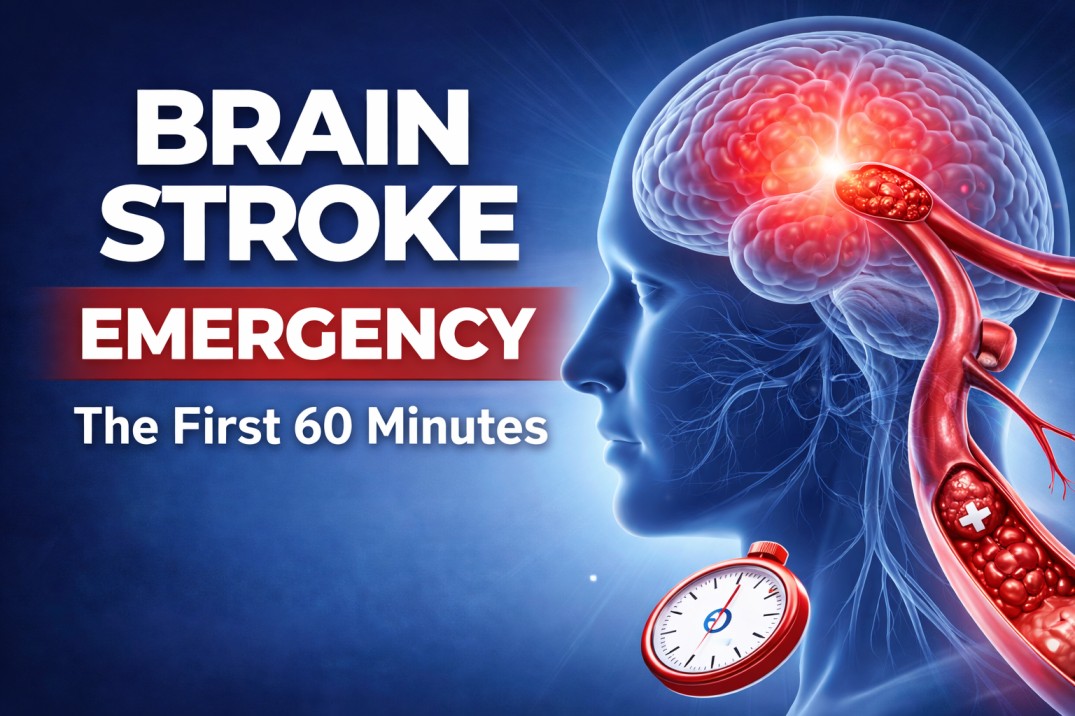
A brain stroke does not announce itself politely. It strikes suddenly. Silently. And within minutes, it can change a family’s life forever. Across Haryana, many patients lose precious time because early Brain Stroke Symptoms are mistaken for weakness, acidity, fatigue or stress. That delay is dangerous. Stroke is a true medical emergency. Every passing minute means more brain cells dying. What you do in the first 60 minutes of a brain stroke decides survival, recovery, cost and quality of life.
A stroke happens when blood supply to the brain is blocked or a blood vessel bursts. The brain cannot store oxygen. When blood flow stops, brain cells begin to die almost immediately. According to the American Stroke Association, nearly 1.9 million brain cells die every minute during an untreated stroke. This is why early Stroke Emergency Treatment saves lives and prevents lifelong disability.
Understanding Brain Stroke Types
There are two main types of stroke. An ischemic stroke occurs when a clot blocks blood flow to the brain. This accounts for nearly 85% of all strokes. A hemorrhagic stroke happens when a blood vessel ruptures and bleeds into brain tissue. Both are equally dangerous but require different Stroke Emergency Treatment approaches.
A Transient Ischemic Attack (TIA) or “mini-stroke” causes temporary symptoms but leaves no permanent damage. However, it is a serious warning. Studies show that 1 in 3 people with TIA will suffer a major stroke, many within weeks if untreated.
Why the First 60 Minutes Decide Everything
Doctors call the first hour after stroke onset the Golden Hour. Treatment started within this window dramatically improves survival and reduces paralysis, speech loss and memory damage. Clot-dissolving medicines are most effective when given early. Delays beyond this window sharply increase disability and long-term care costs.
In Haryana, families often lose time arranging transport or consulting local clinics first. This delay is irreversible. Stroke Emergency Treatment must begin at a hospital equipped with imaging and neurological expertise — not at home.
Recognising Brain Stroke Symptoms Early (BE-FAST)
The fastest way to recognise Brain Stroke Symptoms is the BE-FAST method:
B – Balance: Sudden dizziness or inability to walk
E – Eyes: Sudden vision loss in one or both eyes
F – Face: One side of the face droops while smiling
A – Arm: Sudden weakness or numbness in arm or leg
S – Speech: Slurred speech or inability to speak
T – Time: Time to call emergency services immediately
Even one sign is enough. Do not wait for all symptoms to appear.
Other Brain Stroke Symptoms include sudden confusion, severe headache, vomiting or loss of consciousness. These are red flags and waiting for symptoms to “settle” is a dangerous mistake.
What To Do in the First 60 Minutes
Step 1: Call Emergency Services Immediately
Dial 108 or 112. Clearly state “suspected stroke.” Ambulance response ensures faster hospital access and early Stroke Emergency Treatment.
Step 2: Note the Exact Time
Doctors must know when symptoms started. Many advanced stroke therapies are time-restricted. Unknown timing can prevent life-saving treatment.
Source: https://www.ninds.nih.gov/health-information/disorders/stroke
Step 3: Do Not Give Medicines
Never give aspirin or home remedies. In hemorrhagic stroke, aspirin can worsen bleeding.
Step 4: Keep the Patient Safe
Lay them on their side if unconscious. Do not allow food or water. Stay calm.
What Happens at the Hospital During a Brain Stroke
- On arrival, urgent brain imaging (CT or MRI) identifies stroke type.
- For ischemic stroke, clot-dissolving drugs may be administered within the therapeutic window.
- In selected cases, mechanical clot removal is considered. For hemorrhagic stroke, bleeding control and pressure management are prioritised.
- Proper Stroke Emergency Treatment reduces death and disability dramatically when started early.
Delayed treatment increases rehabilitation needs. Long-term physiotherapy, speech therapy and loss of earning ability often cost far more than early hospital care. Early Stroke Emergency Treatment is not expensive but disability is.
CALL DR. SINGH Immediately to save a LIFE!
Who Is at High Risk of Brain Stroke
Certain conditions increase the likelihood of stroke:
-
High blood pressure
-
Diabetes
-
High cholesterol
-
Smoking
-
Heart disease, including atrial fibrillation
-
Obesity & sedentary lifestyle
Delayed attention/care leads to paralysis, speech loss, memory decline and emotional burden on families.
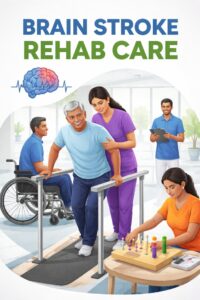
Stroke Recovery, After Care and Rehablitation
With the best neurosurgeon in Haryana, Dr. Kavindra Singh by your side, you can be sure of early regain of independence faster. Early Stroke Emergency Treatment saves dignity, income and quality of life.
Once acute treatment is done, rehabilitation begins early:
-
Physiotherapy to regain movement
-
Speech therapy for communication issues
-
Occupational therapy to restore daily living skills
-
Lifestyle adjustments to prevent recurrence
Stroke recovery can continue for months because each patient’s body and journey is unique.
When to Seek Help for Brain Stroke Without Delay
Any sudden neurological symptom, even if mild → Emergency medical response required. Don’t wait for all symptoms to appear. A single sign could still be a stroke.
Trusted Stroke Care in Haryana by Dr Kavindra Singh
For patients in Narnaul and across Haryana, fast access to ethical, evidence-based neurological care matters. Dr. Kavindra Singh, recognised as the best Stroke Doctor in Narnaul because he provides judgment-driven evaluation, timely referral and patient-first decision-making. Surgery is advised only when necessary.
If stroke symptoms appear, do not wait. Call immediately and reach expert care. Early Stroke Emergency Treatment can save a life!